About the MFR


The Metaline Falls Railroad (MFR) is a proto-freelanced model railroad based on the Pend Oreille Valley Railroad located in northern Idaho and north eastern Washington State. For the very latest on the layout, please visit my YouTube channel and follow along with my Instagram account and Facebook Group.
Showing posts with label Research. Show all posts

Thursday, September 24, 2020

Ponderay Newsprint Closes (For now?)

 I've held off from posting this for a bit, but it should be noted that the Ponderay Newsprint Company located in Usk Washington is permanently shutting down.  This closure is a huge blow to the surrounding community and to the POVA itself.

Newspaper reports indicate:

The Pend Oreille Public Utility District previously said the mill - which until recently used about 70% of the utility's electricity - had begun a period of "indefinite idling" after a two-week pause of operations.

The mill, which opened in late 1989, has supplied newsprint for publications in the Midwest, along the West Coast, and in Asia and South America. The plant is jointly owned by Lake Superior Forest Products, a subsidiary of Quebec-based Resolute Forest Products, and five major U.S. publishers, according to its website.

This closure will no doubt have major impacts on the railroad industry in the Pend Oreille valley as the mill was the railroad's largest customer. What will the future of the POVA be like?

Well, apparently the Kalispel Indian tribe is looking to purchase the Newsprint company in hopes of re-opening the mill according to the Spokesman-Review

Tribal vice chair Curt Holmes said the tribe had its chief financial officer review all the possibilities for the plant and its 900 acres, and the primary goal is to reopen the paper mill and restore the jobs that were so vital for the community’s survival.

“I live up on the reservation,” Holmes said. “It’s hard to find economic development opportunities that work up there. My dream is that my kids and other kids, if they choose to stay, can still have meaningful employment up there.”I've grown quite fond of the Pend Oreille Valley over the years as my research has given me a great deal of appreciation for the history, the industry, the people, and the beautiful landscape found in the area. 

Whatever the future of the mill might be, it will always have a special place on my humble, little model railroad.

Monday, March 9, 2020

POVA on the Cover of a Magazine

A friend in the hobby pointed me to the February issue of Railfan & Railroad where the POVA is featured on the cover of the magazine!  The article itself is very cool and very informative. I learned a lot I did not know about the railroad's history. I also finally got a good, clear sense of day-to-day operations on the modern POVA railroad. This helped to confirm that my freelanced approach to this railroad is indeed prototypical and should serve to re-create the feeling of modern shortline railroading in the pacific northwest nicely.

I must say, it is a bit overwhelming to have such a surge of information arrive on my doorstep after spending years and years trying to slowly piece together the puzzle that is this railroad from various blog postings, pictures, google maps, etc.

Monday, July 22, 2019

Movie Mondays #13

DJ from DJ's Trains has a video up where he shows off some of the key features of short line railroading that make it an ideal subject for model railroaders. Check out this video along with the many more videos he has where he shares his experience as a conductor on a 1:1 scale railroad.


Wednesday, June 19, 2019

Monday, February 4, 2019

Givens and Druthers (UPDATED for new layout)

There is a popular term amongst model railroaders known as "Givens and Druthers". This refers to a list of "Givens" (hard and fast requirements for a model railroad which act as constraints for the modeler to work within)  and "Druthers" (design guidelines that help to set direction for the modeler)

And so, seeing as how I'm starting all over again from scratch, I think it's a perfect time to review and update my requirements and goals for the layout.

GIVENS
  • The model railroad will be a (mostly) around-the-wall style cantilever (suspended) layout with considerations for a hidden yet easily accessible staging area.
  • The layout must be designed with comfort for operators in mind. Layout height, wiring, coupler, turnout, and locomotive control should all be designed for both ease of use and enjoyment.
  • Though operations is the main focus, the design must allow for continuous running giving the operators an opportunity to just sit back and watch trains run.
  • The layout must be built to a level of quality that approaches that of "art" in that entering the layout room is akin that that of stepping into a museum installation. This design philosophy is carried through not only the quality of the modeling, but also the design and construction of the benchwork and the preparation and presentation of the room itself.

DRUTHERS 
  • Operations should be simple, yet elegant.  The emphasis will be on fewer industries and longer sidings as opposed to a lot of industries, short sidings and overly complicated track work.
  • Operational design should allow for a typical ops session lasting between an hour to two hours depending on the number of cars requiring movement.
  • The design should include large industrial complexes and expansive scenic areas as showcases for intricate design and modeling techniques and to serve as focused points-of-interest for the layout.
  • The design should also include a faithful representation of a number of prototypical scenes found within the Pend Orelle Valley in the Northeastern Washington/Idaho area.
  • The overall theme of the model railroad is one of a small shortline struggling to earn it's keep with few customers and difficult economic conditions.  All artistic design considerations, (from choosing which season to model, to detailing the level of distress on mainline track) should be made with the layout's theme in mind.
That should about do it.  I've found that by distilling all of my wants and needs down to a few small bullet points, I end up with a plan that feels very focused and purposeful.  I feel that focus and purpose is key to the success of any model railroad, but when you are limited by time and money, (as I am)  this list of "Givens and Druthers" becomes all the more important.

Sunday, November 25, 2018

The Track Plan

(Note: Some minor changes have been made to the track plan since creating the video. See the image attached to this post for the latest schematic.)

Whelp, I've done it. I've finally landed on a track plan for my new layout. This plan is the result of months of design and deliberation. It incorporates nearly all of the features I love in model railroading and should provide me many years of enjoyment. I go in-depth into the design of the track plan in the following video:


The plan is simple, but allows an operator or two plenty of operational enjoyment. If I'm not in the mood for operations, I can even sit back with a beer and enjoy running a couple of trains around in circles. I've included a yard, a nice industrial area, and a couple nice, unencumbered areas where I can enjoy my favorite kind of modeling: Scenery.

True to proto-freelance modeling, the towns and industries located on the layout exist in real life. (though I've taken plenty of liberties with the locations and track arrangement to best serve my needs) The town of Usk stands-in for several towns found in the Pend Oreille Valley and just like on the prototype, the yard at Sandpoint is the valley's connection with the rest of the world. I've also included a few key scenic features found on the prototype including the old Great Northern Depot at Sandpoint, the bridges over the Pend Oreille River, Blueslide tunnel near the crossing of Highway 20, and the iconic Box Canyon Bridge.

(click to view larger)

Let's take a moment to look at the industries represented on the layout and learn about their mostly freelanced (i.e. pretend) histories:
  • Lehigh Cement: With operations beginning in 1911, Lehigh Cement is the oldest rail-served industry in the valley, This historic factory once towered over the town of Metaline Falls however, the factory's advanced age along with rail service concerns required the owners to shutter operations at it's original location and build a new, modern plant south at Usk Washington. The factory ships 5-6 2-bay covered hoppers an operating session. 
  • Ponderay Newsprint Company: Ponderay has been the one of the valley's largest rail customers since it began operations in 1989. The plant ships around 2-3 boxcars loaded with newsprint an operating session and receives boxcars loaded with recycled paper materials as well as tank cars loaded with kaolin and other chemicals on an as-needed basis.
  • Vaagen Bro's Lumber Company: Part of the Idaho Forrest Group, this mill has been supplying America with high quality wood products for decades. Due to a recent lull in the new construction market, the mill only ships 2-3 loads of lumber on center partition cars each operating session. 
  • Tri-Pro Poll Mill: The mill Generally ships around 1-2 custom built bulkhead flat cars loaded with poles an operating session.
  • Pacific Steel and Recycling: A small employee-owned recycling facility which receives loads of scrap steel and other recyclable products via boxcar and gondola only on occasion.
This plan is sure to change a bit once flextrack meets plywood, but I'm pretty happy with where it stands right now. It was a lot of fun to put together and I can't wait to get started building benchwork!

Thursday, October 4, 2018

Am I even proto-freelancing anymore?

I've finished the final version of my track plan and am very happy with it. (a walkthrough video detailing the plan will be coming shortly) The plan is the result of many, many hours of design and research as well as many additional hours of laying awake in bed thinking about that design and research.  The end result is a plan that incorporates all of my "givens and druthers," takes into consideration cost and time constraints, and very closely aligns with the prototype that I am using as inspiration...

...perhaps too closely?

I've always been drawn to proto-freelance-style model railroading. Creating a model that looks and acts like a real railroad without the constraints of having to match a particular prototype seems perfect for me. I will admit that much of my draw towards the freelancing side of the hobby can be attributed to my lack of knowledge about how real railroads operate. In the past, this knowledge gap could have been attributed to the fact that research was so much more difficult and time intensive. As relevant information has become more and more available online, that excuse holds less and less water.

The very earliest iterations of the Metaline Falls Railroad can be traced back to a small LEGO Trains layout I built on a table in my basement over 11 years ago. The layout was very small and limited in it's operation, but I wanted to give it a real-world location and a bit of "legitimacy".  At this point in time, all I was really looking for was a real-world location that had three key features.
  1. A Bridge
  2. A Tunnel
  3. A Cement Industry so I could include my favorite type of railcar: 2-Bay Covered Hoppers
With these three features in mind, I started my search online. Soon enough the old Metaline Falls Branch of the Milwaukee Road (currently owned and operated by the Pend Oreille Valley Railroad) grabbed my attention and an obsession was born.

One of my custom-built locomotives now relegated to display duty on a shelf at the office.

When I finally decided to jump back into more traditional model railroading, I tore down that LEGO layout, but the inspiration that was Metaline Falls survived. I started to research the area more in-depth and found myself fascinated by the history and industry of the area. Although I was very limited by space constraints, I wanted to do the prototype justice. I decided to model the industries on my little layout around the "industrial theme" of the area. Thus, the cement factory took prominence, The real-world paper mill became a paper recycling facility, and the small-diameter lumber mill became an off-layout representation of a pulpwood mill. I even made an effort to include the Box Canyon Bridge and Dam at as close to full-sized as I could for a layout so small.

At this point I really felt like I was leaning into this whole "proto-freelancing" mentality really well.  I was taking inspiration from the real world while going my own way. It's easy when you are working at such a small scale. So many compromises are forced on you that the decisions about what you can and cannot include are pretty much already made for you. It's easy to be a freelancer when being prototypical is completely out of the question.

All of that changed when I decided to expand the layout to fill a decent sized room. Suddenly I had the room to include a respectable representation of the paper mill. I had the room for the lumber mill, and that tunnel, and a more scale representation of the bridge, and don't forget the interchange yard, or the old Great Northern Depot, or that one lumber yard down the river a bit, and while I'm at it I might as well include a trestle, or two...

Before I knew it I found myself collecting images of the real-world grade crossings from every angle I could find in order to correctly model the angle and rise of the road leading to the tracks. I'd watch vacation videos posted to Youtube by people who visited the area in order to get an idea of the variety of types of trees found along the mountainside. I began studying timetables of trains that pass through the interchange yard and used Google Earth to following those routes to their destinations in order to get an idea of where those trains go and what they haul. I've collected engineering drawings of key bridges. Heck, I even read through the past two years of meetings and minutes of the prototype railroad in order to get an idea of the real-world challenges a railroad in that part of the country faces on a monthly basis.

This is not what a freelancer does... These are the patterns of a madman... A prototype modeler.

How could I call what I'm doing "Proto-Freelancing" anymore when the plan for the model railroad has become such a carefully considered representation of the real thing? There are plenty of small changes I've made for mostly artistic reasons. I consider myself an artist first and foremost and I do think of model railroading as an art form. That said, the only really major departures from the real world I've designed are:
  1. I've included a cement industry that hasn't existed on the prototype in many, many years and added rail service to an industry that in the real world doesn't have any need for it.
  2. I've omitted a few industries and mashed three or so small towns worth of industries into one town for the sake of compression.
  3. I've re-ordered where many of the signature scenes are located because of space constraints.
  4. I secretly hate the paint jobs on the prototypes locomotives (I also find the name of the prototype railroad to be difficult to read if you don't know the proper pronunciation) so I've come up with my own name and color scheme.
That's pretty close to being it. Those first three points are things that EVERY modeler does. Even those rivet-counting freaks! The fourth point is really just an example of how that creative part of my brain won't allow me to accept something I find artistically displeasing.

So I'm not Freelancing, nor am I really prototyping. I'm only sorta proto-freelancing.  Maybe I've got to come up with a new term? Free-Protoyping? or maybe Creative Prototyping? Oh, oh that's it! "CREATIVE PROTOTYPING!"

Serendipitously enough, Lance Mindhiem just released an article while I was coming up with this post where he explores some of these same ideas I've been struggling with.


Wednesday, September 19, 2018

Wordless Wednesday #10

A 2-6-6-2 rolls north up the beautiful Pend Oreille River Valley on the Metaline Falls Branch

Friday, September 7, 2018

Up All Night

You know those nights where you are awake until 4:30 in the morning wondering how to best represent modern utility pole manufacturing on your model railroad? These are the things that haunt me these days.


Thursday, March 1, 2018

Critique my Track Plan

There is an interesting discussion going on over in the Model Railroad Hobbyist forums where I've posted a couple of track plan ideas for an expanded version of the MFR. There are a lot of really knowledgeable guys there offering some great advice and I am learning a lot. Head on over to my post to check it out and maybe jump in the conversations!


Thursday, February 22, 2018

Happy Accidents

Just for kicks, I went on Google Maps the other day to check out the Pend Oreille Valley area where I'd be placing my proto-freelance line and was delighted to find that Google had updated their aerial views with new higher resolution photography.

This new photography made studying the paper mill in the town of Usk much easier and to my surprise, the trackage around the mill matches up with my current layout fairly well!

I sat there for a while considering the possibilities. Could I actually build a faithful representation of the paper mill? One which would allow me to operate it in a prototypical fashion? It didn't take me long to decide that this happy accident was just too good not to take advantage of.  I MUST model this mill.

With that decision made, a new problem arose.  Where do I put the cement plant, yard tracks and all the other industries that were originally crammed into that tiny little module? Looks like it is finally time to seriously consider expanding the layout!

Tuesday, March 1, 2016

The End of the Steamboat Era

I love discovering old photographs that shed light on the history and people of the area I'm modeling! The image below features a steamboat navigating the waters of Box Canyon near Ione.  The narrow portion of the canyon in the background is where the future Box Canyon Bridge will be built when the railroad eventually comes to the area.


Below is the same boat heading south through the canyon returning from a trip to Metaline Falls. This photo really shows how treacherous the rapids could be! Later a dam will be built at the location of the photograph. That, along with the railroad rendered the steamboat a thing of the past.


An article about the end of the steamboat era read:  "old timers along the river welcomed the coming of the railroad, but many of them remember with pleasure the romantic days of the river boats. Many a big poker game and carousal were staged on [the last steamboat] in the days of her glory, and many well-known characters held the wheel and rode in her cabins."


Monday, March 10, 2014

New Horsepower on the MFTR

As production began to ramp up at Lehigh Cement, the MFTR found themselves in need of additional pulling power to handle the increase in rail traffic. That power has arrived on the railroad as a lovely blue and white GP38-2 leased from EMD leasing.

I splurged last week and bought an Athearn Genesis GP38-2 installed with Tsunami Sound for my little layout.  I don't normally spend this kind of money, but I've been dying for an engine in this paint scheme for several years now... so there she is.

As far as I can tell, real EMDX #782 is hard at work in Dallas right now, however in my imaginary world EMDX simply leased it to the MFTR instead.


My two engines look so great lashed together I decided to create a short video to show them off and also to give you an idea of how I operate my model railroad.


UPDATE: Andrew from the Model Railroad Hobbyist forums shared this photo of #782's sister unit #778 being utilized on the Kettle Falls branch which just happens to be located right next door in the valley just beyond those mountain peaks I painted on my backdrop. Good to know I got at least one detail right on my railroad!


Wednesday, September 11, 2013

A Plausible History

The Steamboat METALINE navigates the nearly impassable rapids at Box Canyon near Ione Washington. This photo was captured circa 1890s. Soon, the railroad would arrive, making such a dangerous journey unnecessary.
Although I am creating a freelanced railroad and I am thoroughly enjoying the freedom and the lack of constraints that freelancing offers, I wanted to evoke that sense of historic authenticity usually reserved for prototype modelers.

I hopped on to Google to research the location I chose for my modeling and from that research I developed a timeline of events important to the development of the MFTR as it "exists" today. Many of these events are historically accurate. (Such as the the construction of the original rail line in 1909.) Other events are completely fictional and serve as justification for the choices I've made in my modeling. (Such as the cement operations moving from it's original location to the town of Ione) Still others are minor tweaks of real events. (Such as the change in management and direction at the Ponderay Paper Recycling Co.)

With that in mind, here is a brief "history" of railroading in the Pend Oreille Valley: (Updated for the new layout)
  • 1892 - The Great Northern Railroad (GN) reached Newport Washington enabling shipment of timber towed upstream from mills located along the Pend Oreille River Valley as far north as Metaline Falls.
  • 1909 - The Lehigh Portland Cement Co. (Originally Inland Portland Cement Co.) is established in Metaline Falls.
  • 1909-1911 - The original line from Newport to the town of Metaline Falls was built by Fredrick Blackwell and given the name Idaho and Washington Northern (I&WN). 
  • 1925 - A slump in the lumber market led to the sale of the I&WN to the Milwaukee Road.
  • 1956 - Construction completed on the Box Canyon Dam.
  • 1967 - The Boundry Hydroelectric Dam is built in the northern most area of the Pend Oreille Valley. The dam supplies up to one-third of Seattle City Lights power, It's presence has changed the landscape, permanently submerging the famous Metaline Falls river rapids.
  • 1970 - The Great Northern together with the Northern Pacific, (NP) Chicago, Burlington and Quincy, (CBQ) and the Spokane, Portland and Seattle Railway (SP&S) merge to form the Burlington Northern Railroad (BN). This new railroad continued supplying rail traffic to the Pend Oreille Valley.
  • *1983 - the Vaagen Brothers Lumber company acquired the valley's largest mill located in the town of Usk.
  • 1985 - Soo Line purchased the bankrupt Milwaukee Road and takes over operations in the valley.
  • *1988 - The Ponderay Newsprint Co. is founded in Usk bringing with it new economic opportunities.
  • 1990 - Canadian Pacific gained full control of the Soo Line. 
  • *1994 - Continuing to find success in the Pend Oreille Valley, The Lehigh Portland Cement Co. moved operations from it's aging plant in the town of Metaline Falls to a new plant located in nearby Ione. This move saved the railroad 20 miles of travel round trip. The old plant continued to receive occasional loads of cement to store in it's large capacity silos for many years after.
  • *1996 - The Burlington Northern merged with the Atchison, Topeka and Santa Fe (ATSF) to form the Burlington Northern and Santa Fe Railway (BNSF). This new railway continues to supply traffic to the valley.
  • 1998 - For economic reasons, The BNSF proposes abandonment of the line from Sandpoint to Metaline Falls. Rather than see the line abandoned, the citizens of Pend Oreille County joined together and voted to create the Port of Pend Oreille to operate the Metaline Falls Railroad (MFR). The name honors both the lovely town at the end of the line and it's historic falls. Both of which have contributed greatly to the valley's history..
  • *2009 - In an effort to save on the costs of upkeep, the MFR filed for abandonment of the rail line and its several tunnels and wooden trestles north of the Box Canyon Bridge leading to Metaline Falls.
(*These dates represent a fictionalized version of historical events.)

Developing this timeline has been a lot of fun. Not only did I enjoy creating a plausible history for my freelanced railroad, but I also found myself absolutely fascinated by the real history of the Pend Oreille Valley which only increases my desires to do it justice with my fictional representation.

Wednesday, February 27, 2013

A Trip to Metaline Falls by Rail

Youtube user NorthernWolf76 takes us on a trip along the rail route running between Ione and Metaline Falls Washington. Don't miss the tunnel and the many trestles along the way!


Thursday, January 3, 2013

Using Google Maps as Research for Backdrops

I am very nearly ready to begin painting my backdrop, but before I did, I wanted to gather some photos of the area around Ione Washington so that I could accurately recreate the mountainous vistas of the region.

Gathering photos using the Google Maps street view is an easy way of obtaining accurate images of your chosen prototype, but finding a good angle to view distant landscape features may be difficult because Street View photographs are often obscured by buildings and large trees. The following image shows the area where I acquired most of my reference photos for the backdrop.


As you can see, I ended up having to capture many images from across the river, looking back on the town from a distance. I found it helpful to start in areas where the tree line was sparse.


I plan on using these shots and many others to help identify and create a plausible mountain ridge line when it comes time to slap paint on the backdrop.

Well, That's all for now!  I've purchased my supplies for painting the backdrop and now it's just a matter of getting up the courage to start throwing down some paints!  Wish me luck!


Thursday, December 13, 2012

Great Reading on the Internet #2

I've spent the last week or so reading through some really great model railroad blogs and wanted to quickly share them with you.

The first of which is Bernie Kempinski's amazing Civil War era model railroad. His modeling is outstanding and his blog is extremely detailed, interesting and entertaining.  Here is a railroad that is about as opposite of what I am modeling as you can get and I found that I was absolutely riveted to his blog. (I was up till 3:00 in the morning reading it on my iPad in bed.)

Next up is a series of really awesome picture heavy articles of various historical New York city railroad spots including 28th street yardHarlem Transfer, Rikers Island, and many many more. The research is exhaustive and the gentleman "Phil" who gathered the information should be commended for his work.  I find it so interesting that I am eyeing a spot in the corner of my basement that would make a perfect location for an N-Scale 28th street yard...

Finally, we have the website for a Model Railroad that is in my mind, the gold standard of the type of small, freelanced railroad modeling that inspires me and that is the Washington Northern by Kevin Kiettke.  His site is so beautiful and so much fun to explore.  I highly recommend everyone take a look at the amazing work that is on display on Kevin's site.

Wednesday, November 28, 2012

Metaline Falls Revealed

Youtube user abekinney brings us this great view of the Metaline Falls revealed for the first time in 27 years as the Pend Oreille river reaches a historic low point behind the Boundry Dam.


It's fun to dig through Youtube for little gems like this while researching information on the area I've chosen to model.

If you are interested in learning more about the falls, here is a nice article about the falls from last year that is full of fantastic historical photos like the following:


Tuesday, June 19, 2012

Find an excuse for that caboose!


I love the modern era. I love big, heavy engines winding their way through the mountains along rail routes that are a century old or more. I love old, rusty switchers that may have seen better days but can still be seen moving freight in elderly boxcars along tired old lines between small prairie towns. And yes, I also love the graffiti that seems to find its way on nearly every piece of rolling stock these days. What I miss about past era's of railroading though is the caboose.

Let's face it, if we are trying to emulate the modern era, we really can't justify putting a caboose on the end of our trains. It just isn't done anymore. We've just gotta learn to accept this as just one of the few downsides to modeling the modern era and move on...

...or do we? A few months back, a fellow member of Trainlife showed off some video he had taken of a daily freight train near Fort Edward NY. This is a beautiful area for watching trains and actually has quite a few unique features that really grab me and had I known about this place sooner, I'd most likely have set my railroad here instead of in Washington.

If you study the area closely in Google Maps, you'll find a small yard located just outside of Fort Edward, leading from it is a long, winding branch line which follows the river north to Glen Falls. There are several interesting industries located here who are served along stub sidings and there is no passing siding anywhere along the way to allow the locomotive to run around the cars and push them to their appropriate spots. This then requires that the cars be shoved the 5.5 miles from the yard to their destinations. This looks like a job for a caboose!

I am not entirely familiar with the details of how this works, but essentially, for safety reasons, railroads have rules that say that if a train needs to be shoved for more than a mile, a "shove car" must be used as a platform for the trainman to stand and observe the maneuver from.

For my purposes, I'll be using a caboose to assist while shoving cars back down the main line from Ione to Newport. This is actually really helpful for me because my passing siding on my layout isn't actually long enough to allow an engine to run around an entire train. The caboose also offers a lot of operational interest in that it adds an additional element to consider while switching cars and building trains.

So there you go! The perfect excuse to add a caboose to almost any modern layout!

Wednesday, February 22, 2012

MFTR's New Motive Power

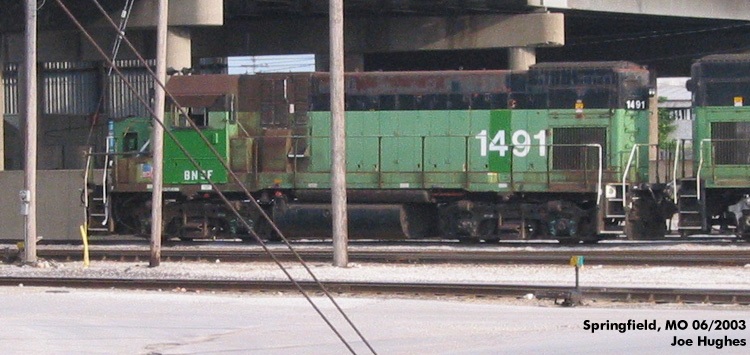
The MFTR is proud to announce the purchase of new motive power for our little railroad.  Former Burlington Northern GP15-1 #1391 (soon to be patched to reflect new ownership) can now be seen making daily runs between the towns of Newport and Ione.  This beautiful engine is just one of the many positive signs we've seen in recent months that things are continuing to look up for the MFTR and the economy of the Pend Oreille Valley as a whole!


I originally didn't intend to purchase another loco in BN green, I wanted my little EMD MP15 to be the main motive power for the railroad with the idea being that the MFTR purchased it's locomotive from the BNSF at the time of the big BN and ATSF merger.  However, I also wanted a locomotive with sound capabilities and and beacon for added visual intrest.  After much research, I found that adding sound and lighting effects to the switcher would be darn near impossible.  There just isn't enough room under the hood to make it happen.  So, I instead purchased a DCC decoder specifically designed for Atlas's MP15 and played with that for a little bit until I decided that it was time to go looking for something new.

After scouring the web, I ran across the GP15-1 you see above.  Not only does it look absolutely beautiful and is full of fantastic detail, but it also came with a Tsunami sound decoder, flashing beacon, and a Mars light installed!  After running it a bit, I've gotta tell ya, sound and lighting truly brings a whole new dimension to the layout!

Before pressing the "buy now" button however, I decided to do a bit of research.  I knew basically nothing about this particular engine and I wanted to be sure that having a GP15-1 still working in the modern era still made sense.  Moreover, there were three different road numbers available to choose from and I wanted the one that seemed to fit best with my railroad.

I found that rebuilt GP15-1's are quite common on shortline railroads.  The Class 1's will often turn them over to leasing companies and they remain a popular choice for shortlines looking for a light-duty locomotive.  In real life, my little BN #1391 started as a Frisco unit before being acquired by BN.  After the BNSF merger, the locomotive was patched and re-lettered #1491. After a few years of service, BNSF turned the engine over to GMTX leasing company. From there the trail goes cold, but It's nice to know that the engine is still out there doing hard work for some small shortline.


Obviously the history of this unit has changed in the imaginary world I've created for my layout: The MFTR acquired #1391 shortly after the BNSF merger. Company management, being very fond of the BN Green scheme, decided to keep it as the primary color sceme of the MFTR.  There are plans however, to patch the engine with the MFTR's official logo. (Just as soon as the committee decides what it should look like.)