About the MFR


The Metaline Falls Railroad (MFR) is a proto-freelanced model railroad based on the Pend Oreille Valley Railroad located in northern Idaho and north eastern Washington State. For the very latest on the layout, please visit my YouTube channel and follow along with my Instagram account and Facebook Group.
Showing posts with label Freelance. Show all posts

Tuesday, September 29, 2020

Track Plan Adjustments

I've made a few adjustments to the track arrangement on my model railroad First, I've removed the second engine servicing track to allow the scene to breathe some more. The removal of this track allows me to include an engine shed while leaving plenty of room for additional trackside details that would have been difficult to squeeze in before.

Additionally, I removed a short storage track on the opposite end of Sandpoint yard as it was too short to spot more than a single car and was all but useless on my layout.

These updates are a result of taking what I've created on virtual paper and laying it down on physical plywood.  I've found that no matter how careful I am when designing a track plan, the reality of turnout length and clearances ultimately requires that I trim back my original intentions.

Click to View Larger

Sunday, November 25, 2018

The Track Plan

(Note: Some minor changes have been made to the track plan since creating the video. See the image attached to this post for the latest schematic.)

Whelp, I've done it. I've finally landed on a track plan for my new layout. This plan is the result of months of design and deliberation. It incorporates nearly all of the features I love in model railroading and should provide me many years of enjoyment. I go in-depth into the design of the track plan in the following video:


The plan is simple, but allows an operator or two plenty of operational enjoyment. If I'm not in the mood for operations, I can even sit back with a beer and enjoy running a couple of trains around in circles. I've included a yard, a nice industrial area, and a couple nice, unencumbered areas where I can enjoy my favorite kind of modeling: Scenery.

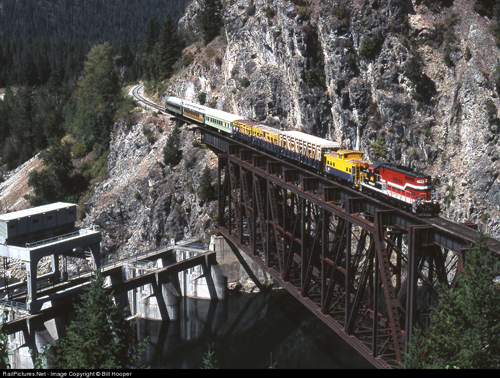
True to proto-freelance modeling, the towns and industries located on the layout exist in real life. (though I've taken plenty of liberties with the locations and track arrangement to best serve my needs) The town of Usk stands-in for several towns found in the Pend Oreille Valley and just like on the prototype, the yard at Sandpoint is the valley's connection with the rest of the world. I've also included a few key scenic features found on the prototype including the old Great Northern Depot at Sandpoint, the bridges over the Pend Oreille River, Blueslide tunnel near the crossing of Highway 20, and the iconic Box Canyon Bridge.

(click to view larger)

Let's take a moment to look at the industries represented on the layout and learn about their mostly freelanced (i.e. pretend) histories:
  • Lehigh Cement: With operations beginning in 1911, Lehigh Cement is the oldest rail-served industry in the valley, This historic factory once towered over the town of Metaline Falls however, the factory's advanced age along with rail service concerns required the owners to shutter operations at it's original location and build a new, modern plant south at Usk Washington. The factory ships 5-6 2-bay covered hoppers an operating session. 
  • Ponderay Newsprint Company: Ponderay has been the one of the valley's largest rail customers since it began operations in 1989. The plant ships around 2-3 boxcars loaded with newsprint an operating session and receives boxcars loaded with recycled paper materials as well as tank cars loaded with kaolin and other chemicals on an as-needed basis.
  • Vaagen Bro's Lumber Company: Part of the Idaho Forrest Group, this mill has been supplying America with high quality wood products for decades. Due to a recent lull in the new construction market, the mill only ships 2-3 loads of lumber on center partition cars each operating session. 
  • Tri-Pro Poll Mill: The mill Generally ships around 1-2 custom built bulkhead flat cars loaded with poles an operating session.
  • Pacific Steel and Recycling: A small employee-owned recycling facility which receives loads of scrap steel and other recyclable products via boxcar and gondola only on occasion.
This plan is sure to change a bit once flextrack meets plywood, but I'm pretty happy with where it stands right now. It was a lot of fun to put together and I can't wait to get started building benchwork!

Thursday, October 4, 2018

Am I even proto-freelancing anymore?

I've finished the final version of my track plan and am very happy with it. (a walkthrough video detailing the plan will be coming shortly) The plan is the result of many, many hours of design and research as well as many additional hours of laying awake in bed thinking about that design and research.  The end result is a plan that incorporates all of my "givens and druthers," takes into consideration cost and time constraints, and very closely aligns with the prototype that I am using as inspiration...

...perhaps too closely?

I've always been drawn to proto-freelance-style model railroading. Creating a model that looks and acts like a real railroad without the constraints of having to match a particular prototype seems perfect for me. I will admit that much of my draw towards the freelancing side of the hobby can be attributed to my lack of knowledge about how real railroads operate. In the past, this knowledge gap could have been attributed to the fact that research was so much more difficult and time intensive. As relevant information has become more and more available online, that excuse holds less and less water.

The very earliest iterations of the Metaline Falls Railroad can be traced back to a small LEGO Trains layout I built on a table in my basement over 11 years ago. The layout was very small and limited in it's operation, but I wanted to give it a real-world location and a bit of "legitimacy".  At this point in time, all I was really looking for was a real-world location that had three key features.
  1. A Bridge
  2. A Tunnel
  3. A Cement Industry so I could include my favorite type of railcar: 2-Bay Covered Hoppers
With these three features in mind, I started my search online. Soon enough the old Metaline Falls Branch of the Milwaukee Road (currently owned and operated by the Pend Oreille Valley Railroad) grabbed my attention and an obsession was born.

One of my custom-built locomotives now relegated to display duty on a shelf at the office.

When I finally decided to jump back into more traditional model railroading, I tore down that LEGO layout, but the inspiration that was Metaline Falls survived. I started to research the area more in-depth and found myself fascinated by the history and industry of the area. Although I was very limited by space constraints, I wanted to do the prototype justice. I decided to model the industries on my little layout around the "industrial theme" of the area. Thus, the cement factory took prominence, The real-world paper mill became a paper recycling facility, and the small-diameter lumber mill became an off-layout representation of a pulpwood mill. I even made an effort to include the Box Canyon Bridge and Dam at as close to full-sized as I could for a layout so small.

At this point I really felt like I was leaning into this whole "proto-freelancing" mentality really well.  I was taking inspiration from the real world while going my own way. It's easy when you are working at such a small scale. So many compromises are forced on you that the decisions about what you can and cannot include are pretty much already made for you. It's easy to be a freelancer when being prototypical is completely out of the question.

All of that changed when I decided to expand the layout to fill a decent sized room. Suddenly I had the room to include a respectable representation of the paper mill. I had the room for the lumber mill, and that tunnel, and a more scale representation of the bridge, and don't forget the interchange yard, or the old Great Northern Depot, or that one lumber yard down the river a bit, and while I'm at it I might as well include a trestle, or two...

Before I knew it I found myself collecting images of the real-world grade crossings from every angle I could find in order to correctly model the angle and rise of the road leading to the tracks. I'd watch vacation videos posted to Youtube by people who visited the area in order to get an idea of the variety of types of trees found along the mountainside. I began studying timetables of trains that pass through the interchange yard and used Google Earth to following those routes to their destinations in order to get an idea of where those trains go and what they haul. I've collected engineering drawings of key bridges. Heck, I even read through the past two years of meetings and minutes of the prototype railroad in order to get an idea of the real-world challenges a railroad in that part of the country faces on a monthly basis.

This is not what a freelancer does... These are the patterns of a madman... A prototype modeler.

How could I call what I'm doing "Proto-Freelancing" anymore when the plan for the model railroad has become such a carefully considered representation of the real thing? There are plenty of small changes I've made for mostly artistic reasons. I consider myself an artist first and foremost and I do think of model railroading as an art form. That said, the only really major departures from the real world I've designed are:
  1. I've included a cement industry that hasn't existed on the prototype in many, many years and added rail service to an industry that in the real world doesn't have any need for it.
  2. I've omitted a few industries and mashed three or so small towns worth of industries into one town for the sake of compression.
  3. I've re-ordered where many of the signature scenes are located because of space constraints.
  4. I secretly hate the paint jobs on the prototypes locomotives (I also find the name of the prototype railroad to be difficult to read if you don't know the proper pronunciation) so I've come up with my own name and color scheme.
That's pretty close to being it. Those first three points are things that EVERY modeler does. Even those rivet-counting freaks! The fourth point is really just an example of how that creative part of my brain won't allow me to accept something I find artistically displeasing.

So I'm not Freelancing, nor am I really prototyping. I'm only sorta proto-freelancing.  Maybe I've got to come up with a new term? Free-Protoyping? or maybe Creative Prototyping? Oh, oh that's it! "CREATIVE PROTOTYPING!"

Serendipitously enough, Lance Mindhiem just released an article while I was coming up with this post where he explores some of these same ideas I've been struggling with.


Thursday, September 20, 2018

Local Railroad Gets a Fresh New Look

The Metaline Falls Railroad (MFR) continues it's celebration of 20 years of operation today with the unveiling of a brand-new logo. This is the first time the logo has been changed since the railroad's inception.


"Our previous logo was the result of a contest amongst students of the Pend Oreille County School District." says Matt Forcum, Chairman of the MFR. "Though we all appreciated that logo, we never really made much use of it.  As we approached our 20th anniversary, we saw an opportunity to re-invigorate our brand."

Those with an eye for detail might recognize similarites between this new logo and that of another popular railroad. "The BNSF (Burlington Northern Santa Fe Railway) have been good business partners of ours for many years now." Forcum explains. "We worked closely with them to design a logo that calls attention to this relationship while highlighting the important contribution the MFR makes to the success of the larger network of railroads operating in the Pacific Northwest."

The new logo is decidedly fresh and modern, but it also evokes a sense of the past in it's meandering blue line. As Chairman Forcum puts it, "The curvy blue line is a representation of the Pend Oreille River which has played an incredibly important role in the history and development of not only our little railroad, but also the many industries and people the railroad serves along the river valley."

------------------------------

I had a heck of a good time designing this logo. I was inspired to do so by other freelance railroads with fantastic logos such as the Washington Northern, Utah Belt and the Virginia Midland. Hope you all like it! I can't wait to find ways of using it on my layout!

Thursday, September 13, 2018

End of an Era

I stepped away from model railroading for a couple years to take care of a few life events and was was sad to learn upon my return to the hobby that an imaginary development I had created for my tiny freelance railroad had come to pass in real life. The POVA was forced to abandon the trackage north of Usk to Metaline Falls including the fabulous Box Canyon Bridge.

I had created this very scenario for my railroad back in 2013 as a convenient explanation for why I didn't model the railroad as far north as Metaline Falls. Having just a small shelf-style switching layout, there was no way to include both the bridge and the cement plant all the way at Metaline Falls.  Using the justification of "It was just too expensive to maintain the line north of town" seemed plausible at the time and unfortunately it's become a reality.


I'm really sad to learn of this development as I had hoped to one day take that railfanning excursion along the old Metaline Falls Branch. Now that it is gone, I almost want to find a way to work the town of Metaline Falls back into my model railroad as a metaphorical middle finger to the gods of eventuality. I don't think I can make that happen and still meet my goals for this layout however, so for the time being I'll continue including the abandoned trackage north of Box Canyon (while being able save the bridge itself) as part of my freelanced scenario.

I do feel a bit better however knowing that I will still be able to watch trains lumber over that majestic old bridge in miniature on my own little piece of the pacific northwest.

Monday, September 3, 2018

Starting over from Scratch

After spending some time with my current layout in it's new space and trying to come up with a design for the expanded railroad that would include those original modules, I've come to the conclusion that they just would not fit the space well and I'd be better served starting over from scratch. 

With that in mind I dove into researching and designing a brand-new layout that would make best use of the space available and would allow me many, many years of enjoyment. I don't ever plan on moving from this home, so this layout will be my fourth and FINAL layout. My dream railroad.


The track plan above (click to view larger) is still a work in progress but it incorporates just about everything I enjoy in model railroading.  The plan is simple, but allows an operator or two plenty of operational enjoyment. If I'm not in the mood for operations, I can even sit back with a beer and enjoy running a couple of trains around in circles. I've included a yard, a nice industrial area, and a couple nice, unencumbered areas where I can enjoy my favorite kind of modeling: Scenery.

True to proto-freelance modeling, the towns and industries located on the layout exist in real life. (though I've taken plenty of liberties with the locations and track arrangement to best serve my needs) The town of Usk stands-in for several towns found in the Pend Oreille Valley and just like on the prototype, the yard at Sandpoint is the Valley's connection with the rest of the world. I've also included a few key scenes found on the prototype including Blueslide tunnel near the crossing of Highway 20, a trestle, and the iconic Box Canyon Bridge.

Designing this track plan has been a challenging and rewarding experience and I have to thank the many talented people on the Model Railroad Hobbyist forums for their expertise in helping me come up with this plan. I'm excited to get started and I cant wait to share my progress with all of you!

Wednesday, March 7, 2018

Railbanking or Abandonment?

Much of my inspiration comes from the Kettle Falls International Railway and in 2010 the KFR. (just to the west of the imaginary MFR) experienced a bit of an upset as a large portion of it's line connecting Kettle Falls to Canada was declared for sale or abandonment. Discussion immediately begain around turning the line into an international bike trail, but many wanted to invoke "Railbanking" to preserve the line for future use.

It appears the line has been preserved and is still in use thankfully, but this moment of uncertainty reflects the type of railroading I'm looking to recreate on the MFR. Check out these articles for more info:

http://www.spokesman.com/stories/2010/oct/14/railways-could-become-international-bike-trail/
https://www.trainorders.com/discussion/read.php?15,2380005

Thursday, March 1, 2018

Critique my Track Plan

There is an interesting discussion going on over in the Model Railroad Hobbyist forums where I've posted a couple of track plan ideas for an expanded version of the MFR. There are a lot of really knowledgeable guys there offering some great advice and I am learning a lot. Head on over to my post to check it out and maybe jump in the conversations!


Thursday, February 15, 2018

Terminating the Terminal

I'm an idiot.

I arrived at the name "Metaline Falls Terminal Railroad" after much care and consideration. (as outlined in this blog post here.) You see, naming a model railroad is important to me because a name can evoke an image or feeling in the mind of the viewer.  For artists (and yes, all model railroaders are artists) These images, these feelings become integral to the model.  Just consider what wells up inside you when you hear names like: Gorre and Daphetid, Utah Belt, Grimes Line, and Downtown Spur.  These names not only describe a location, but also evoke a sense of the type of railroading the viewer can expect to experience.

And so, before laying one bit of track, I buckled down and worked to come up with a great name.  One that would be unique, yet memorable and would evoke a sense of a tiny short-line struggling to survive with few customers, isolated and tucked away deep in the mountains and forests of north eastern Washington; The Metaline Falls Terminal Railroad...

...which is why I'm an idiot.

The word "Terminal"  Originally chosen because it "does well to both describe the type of railroad I'm modeling and evoke a sense of inevitability that seems to be so common with modern-era short lines" does NOT, infact mean what I THOUGHT it meant.  I thought "Terminal" meant "End of the line" "This railroad does not interchange with any other railroads besides the one." Nope. Not even close. Turns out "Terminal" means "Railroad that operates and interchanges cars at a railroad terminal."

So, I'm forced to change the name which also meant changing the blog URL which sucks because once you change the blogspot URL, anyone who has that original address saved will have no way of getting to your new one. It does not forward to your new URL nor does it inform the reader that the blog has moved and offers them a link to the new address.

This probably isn't as big a deal as I am making it out to be as I stopped blogging years ago really and whatever readership this thing once had has likely given up on me and moved on.  I also have not re-lettered any of my cars yet, so that saves some headaches and embarrassment there as well.

Anyway, lesson learned. Moving on.

Tuesday, March 8, 2016

Disaster!

This is not good.... Last night I installed CurrentKeepers in my Athearn GP15-1 and GP38-2.  I started with my GP15 first.

Problem #1  The Tsunami board in the model did not match the supplied directions.  I had to do a bunch of searching on the web to finally track down the board model number so I can figure out where to attach the wires. Turns out the board is a TSU GN-1000. This webpage provides an illustration of where the wires need to be soldered: http://www.members.optusnet.com.au/mainnorth/alive.htm

Problem #2 I can't solder apparently. I didn't have an issue soldering track work, but for some reason I could not get the wires to solder to the board at all.  Took me many tries to get it to finally adheir. I tested it on the layout before I attempted to reattach the body and everything worked perfectly! However...

Problem #3 The locomotive comes equipped with headlights, a Mars light and a beacon as well.  These are really cool, but they also mean that there is a mess of wires that won't allow the shell to fit correctly once the CurrentKeeper is installed.  I tried it maybe a half a dozen different ways but no dice.  There is just not enough vertical clearance in the body to make it happen for me.  If I was diligent I could probably re-arrange the wires in such a way that there is enough clearance if not for my last problem...

Problem #4  The screw to the coupler box is stripped and I can't open up the locomotive now.  That's right. When I purchased the locomotive "new" from the online retailer, it came with a partially stripped screw in the coupler box. (along with a handrail that had been broken and glued back into place, but that is a different story) Anyway, that was annoying, but with the right screwdriver and a light touch, I had been able to work around it up to this point. However, last night with the constant assembling, disassembling, rearranging the wires, assembling again, seeing that the body still doesn't quite fit as it should, disassembling again, etc, the screw finally gave up and stripped away completely.

So now I have this locomotive that I can't do anything with. I can't get the body off the frame, I can't close it up completely.  I'm VERY frustrated right now.

By the way, after I ruined my GP15, I installed the second CurrentKeeper in my GP38-2. It went in just fine. No problems at all. Figures.

So, not all is lost.  Truth is I secretly hated that GP15 as it has given me nothing but problems from day 1. Part of me is glad it is gone from my layout. I also think I can spin this into part of the "lore" of the railroad. Something like:

A catastrophic engine failure has placed MFTRs GP15-1 out of commission for the foreseeable future. This comes at a fortuitous time however, as the railroad has seen a decline in rail traffic the past several years. Trains in the Pend Oreille Valley have become shorter in length and less frequent. The extra pulling power has proven to be less economical than beneficial. The crippled GP15-1 now sits at the rail shop in Sandpoint Idaho awaiting it's ultimate fate. 


Monday, March 10, 2014

New Horsepower on the MFTR

As production began to ramp up at Lehigh Cement, the MFTR found themselves in need of additional pulling power to handle the increase in rail traffic. That power has arrived on the railroad as a lovely blue and white GP38-2 leased from EMD leasing.

I splurged last week and bought an Athearn Genesis GP38-2 installed with Tsunami Sound for my little layout.  I don't normally spend this kind of money, but I've been dying for an engine in this paint scheme for several years now... so there she is.

As far as I can tell, real EMDX #782 is hard at work in Dallas right now, however in my imaginary world EMDX simply leased it to the MFTR instead.


My two engines look so great lashed together I decided to create a short video to show them off and also to give you an idea of how I operate my model railroad.


UPDATE: Andrew from the Model Railroad Hobbyist forums shared this photo of #782's sister unit #778 being utilized on the Kettle Falls branch which just happens to be located right next door in the valley just beyond those mountain peaks I painted on my backdrop. Good to know I got at least one detail right on my railroad!


Wednesday, September 11, 2013

A Plausible History

The Steamboat METALINE navigates the nearly impassable rapids at Box Canyon near Ione Washington. This photo was captured circa 1890s. Soon, the railroad would arrive, making such a dangerous journey unnecessary.
Although I am creating a freelanced railroad and I am thoroughly enjoying the freedom and the lack of constraints that freelancing offers, I wanted to evoke that sense of historic authenticity usually reserved for prototype modelers.

I hopped on to Google to research the location I chose for my modeling and from that research I developed a timeline of events important to the development of the MFTR as it "exists" today. Many of these events are historically accurate. (Such as the the construction of the original rail line in 1909.) Other events are completely fictional and serve as justification for the choices I've made in my modeling. (Such as the cement operations moving from it's original location to the town of Ione) Still others are minor tweaks of real events. (Such as the change in management and direction at the Ponderay Paper Recycling Co.)

With that in mind, here is a brief "history" of railroading in the Pend Oreille Valley: (Updated for the new layout)
  • 1892 - The Great Northern Railroad (GN) reached Newport Washington enabling shipment of timber towed upstream from mills located along the Pend Oreille River Valley as far north as Metaline Falls.
  • 1909 - The Lehigh Portland Cement Co. (Originally Inland Portland Cement Co.) is established in Metaline Falls.
  • 1909-1911 - The original line from Newport to the town of Metaline Falls was built by Fredrick Blackwell and given the name Idaho and Washington Northern (I&WN). 
  • 1925 - A slump in the lumber market led to the sale of the I&WN to the Milwaukee Road.
  • 1956 - Construction completed on the Box Canyon Dam.
  • 1967 - The Boundry Hydroelectric Dam is built in the northern most area of the Pend Oreille Valley. The dam supplies up to one-third of Seattle City Lights power, It's presence has changed the landscape, permanently submerging the famous Metaline Falls river rapids.
  • 1970 - The Great Northern together with the Northern Pacific, (NP) Chicago, Burlington and Quincy, (CBQ) and the Spokane, Portland and Seattle Railway (SP&S) merge to form the Burlington Northern Railroad (BN). This new railroad continued supplying rail traffic to the Pend Oreille Valley.
  • *1983 - the Vaagen Brothers Lumber company acquired the valley's largest mill located in the town of Usk.
  • 1985 - Soo Line purchased the bankrupt Milwaukee Road and takes over operations in the valley.
  • *1988 - The Ponderay Newsprint Co. is founded in Usk bringing with it new economic opportunities.
  • 1990 - Canadian Pacific gained full control of the Soo Line. 
  • *1994 - Continuing to find success in the Pend Oreille Valley, The Lehigh Portland Cement Co. moved operations from it's aging plant in the town of Metaline Falls to a new plant located in nearby Ione. This move saved the railroad 20 miles of travel round trip. The old plant continued to receive occasional loads of cement to store in it's large capacity silos for many years after.
  • *1996 - The Burlington Northern merged with the Atchison, Topeka and Santa Fe (ATSF) to form the Burlington Northern and Santa Fe Railway (BNSF). This new railway continues to supply traffic to the valley.
  • 1998 - For economic reasons, The BNSF proposes abandonment of the line from Sandpoint to Metaline Falls. Rather than see the line abandoned, the citizens of Pend Oreille County joined together and voted to create the Port of Pend Oreille to operate the Metaline Falls Railroad (MFR). The name honors both the lovely town at the end of the line and it's historic falls. Both of which have contributed greatly to the valley's history..
  • *2009 - In an effort to save on the costs of upkeep, the MFR filed for abandonment of the rail line and its several tunnels and wooden trestles north of the Box Canyon Bridge leading to Metaline Falls.
(*These dates represent a fictionalized version of historical events.)

Developing this timeline has been a lot of fun. Not only did I enjoy creating a plausible history for my freelanced railroad, but I also found myself absolutely fascinated by the real history of the Pend Oreille Valley which only increases my desires to do it justice with my fictional representation.

Wednesday, February 22, 2012

MFTR's New Motive Power

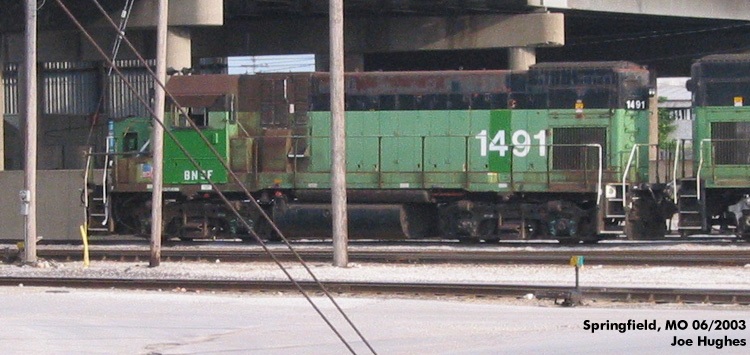
The MFTR is proud to announce the purchase of new motive power for our little railroad.  Former Burlington Northern GP15-1 #1391 (soon to be patched to reflect new ownership) can now be seen making daily runs between the towns of Newport and Ione.  This beautiful engine is just one of the many positive signs we've seen in recent months that things are continuing to look up for the MFTR and the economy of the Pend Oreille Valley as a whole!


I originally didn't intend to purchase another loco in BN green, I wanted my little EMD MP15 to be the main motive power for the railroad with the idea being that the MFTR purchased it's locomotive from the BNSF at the time of the big BN and ATSF merger.  However, I also wanted a locomotive with sound capabilities and and beacon for added visual intrest.  After much research, I found that adding sound and lighting effects to the switcher would be darn near impossible.  There just isn't enough room under the hood to make it happen.  So, I instead purchased a DCC decoder specifically designed for Atlas's MP15 and played with that for a little bit until I decided that it was time to go looking for something new.

After scouring the web, I ran across the GP15-1 you see above.  Not only does it look absolutely beautiful and is full of fantastic detail, but it also came with a Tsunami sound decoder, flashing beacon, and a Mars light installed!  After running it a bit, I've gotta tell ya, sound and lighting truly brings a whole new dimension to the layout!

Before pressing the "buy now" button however, I decided to do a bit of research.  I knew basically nothing about this particular engine and I wanted to be sure that having a GP15-1 still working in the modern era still made sense.  Moreover, there were three different road numbers available to choose from and I wanted the one that seemed to fit best with my railroad.

I found that rebuilt GP15-1's are quite common on shortline railroads.  The Class 1's will often turn them over to leasing companies and they remain a popular choice for shortlines looking for a light-duty locomotive.  In real life, my little BN #1391 started as a Frisco unit before being acquired by BN.  After the BNSF merger, the locomotive was patched and re-lettered #1491. After a few years of service, BNSF turned the engine over to GMTX leasing company. From there the trail goes cold, but It's nice to know that the engine is still out there doing hard work for some small shortline.


Obviously the history of this unit has changed in the imaginary world I've created for my layout: The MFTR acquired #1391 shortly after the BNSF merger. Company management, being very fond of the BN Green scheme, decided to keep it as the primary color sceme of the MFTR.  There are plans however, to patch the engine with the MFTR's official logo. (Just as soon as the committee decides what it should look like.)

Sunday, December 11, 2011

What's in a Name?

UPDATE: The Name of the Railroad has changed slightly. More details here.

You know what one of the toughest decisions I've had to make while designing this railroad has been? Not choosing a location or theme or choosing which industries to model.  The toughest decision has been coming up with a name for the railroad.

I haven't spoken with other freelance modelers about how they had come up with their own railroad's names but I imagine that, much like me, they take on the task pretty seriously. Does one name their railroad after the region?  A prominent town or a significant geological feature? Should one choose a name with a personal meaning? Perhaps after a grandfather or a favorite vacation spot?

When it came to naming my model railroad, I first sat down with a pen and paper and laid out a few ground rules to help focus me in my efforts:

1. The name must be easy to say, spell, and remember for the purposes of easy "googling" for people looking for information on my railroad.
2. The name must be plausible and consistant with the naming conventions of other regional short line railroads.
3. The name must reinforce the theme of the layout which is that of a small, modern short line working hard to thrive during a difficult economic downturn.

With those three rules in place, I set to compiling a list of items that could be potential fodder for naming my layout.

Cities and towns in the area:

Newport
Usk
Cusick
Ione
Metaline Falls

Prominent bodies of water and geological features:

North Western Washington State.
The Pend Oreille River Valley
Metaline Falls
Box Canyon
Sullivan Lake
Colville National Forrest
Cabinet Mountains

Famous residents, and other naming considerations:

Canadian trapper Dave Thompson
Steamboat Captain Elmer "Cap" Arnold
Entrepreneur Fredrick Blackwell
Panhandle Lumber
Diamond Match Co.
The Timber and Stone act of 1878
Vaagen Brothers
Lehigh Portland Cement Co.

Now, if you are familiar with the area, you will probably say that the most obvious name for my freelance model railroad would be the "Pend Oreille Valley Railroad."  And you would be right.  The only problem is that name is already taken by the REAL shortline railroad that exists in that region. (more on why I don't simply model that railroad in later posts)  Plus, It's hard to say, and spell and doesn't evoke a real sense of the area in and of itself so it kinda violates a few of the rules I laid out for myself.

The layout itself attempts to depict industries and operations between the towns of Usk, Ione and Metaline falls and the modeled portion exists solely in the town of Ione, so perhaps a name like "The Usk, Ione and Metaline Falls Railroad"  But that is kinda a mouthful, plus I dislike the name "Usk" and Ione is scary close to the name of the company I work for which weirds me out a bit.

I could name the layout after the Lehigh Cement Co. which is the most prominent industry on the layout, but... nah.

Ultimately I settled on the name "Metaline Falls Terminal Railroad."  This meets my desires on several levels.  First, it is simple and catchy which satisfies rule #1.  The name feels plausible and consistant when compared to other short lines in the region (Kettle Falls International Railroad, Mount Vernon Terminal Railway, etc.) And finally, "Metaline Falls" refers to not only an area town, but also a section of very heavy rapids that once existed on the Pend Orille River before the Boundary Dam was built, changing the water table and effectively burying the falls for good.  This idea of industrial progress and it's tendency to shape a region both physically and economically with both positive and negative outcomes is a central theme of the layout and satisfies rule #3.

The word "Terminal"  Also does well to both describe the type of railroad I'm modeling (NOPE!) and evoke a sense of inevitability that seems to be so common with modern-era short lines.

Finally, after all of that, the first two letters in the MFTR's reporting marks are my initials! I take that as a sign of good luck, which I am very happy to have as I continue on my adventure in model railroading.

Sunday, June 19, 2011

Welcome to the Metaline Falls Terminal Railroad


Welcome to the Metaline Falls Terminal Railroad! This is the first in what I hope to be a great many posts about the construction and operations of my own little railroad empire. Please feel free to join me on my new adventure!

So what is the MFTR?  Well, it's a Modern-Era freelance railroad inspired by the grand vista and the tough and resilent people of the Pend Oreille Valley in eastern Washington state.  In the real world, the area is serviced by the POVA and doesn't see as much traffic as it once may have.  For my purposes I have decided to give the area a bit of a different history:


Thanks to a strong logging industry and a large Cement Factory, The towns of Ione and Metaline Falls experienced good prosperity through the mid nineties.  In recent years however, demand for east Washington timber has slowed and a sluggish economy has taken its toll on the cement industry.  In response, the BNSF decided to shut down operations in the Pend Oreille Valley north of Newport.

Rather than see the line shut down, the citizens of the Pend Oreille Valley joined together to form the Metaline Falls Terminal Railroad to continue service to the industries so vital to the prosperity of the area.

The Model Railroad itself is a small one. I do not have much room or money for a large railroad, and so I've decided to model a small HO scale shelf layout. along an 10 foot section of wall.  I've taken much inspiration from a number of model railroads recently.  Namely the NCIR: http://oscalewcor.blogspot.com/ and Dawson Station: http://dawson-station.blogspot.com/ I am a big believer in the idea of small model railroads.  Most people seem to think that to build an interesting and engaging layout, one must spend a small fortune and give an entire room of their house over to their trains.  I intend to prove that this is not the case!